Cherif Medawar

How to Raise Unlimited Capital in 90 Days for Real Estate

How to Raise Unlimited Capital in 90 Days for Real Estate

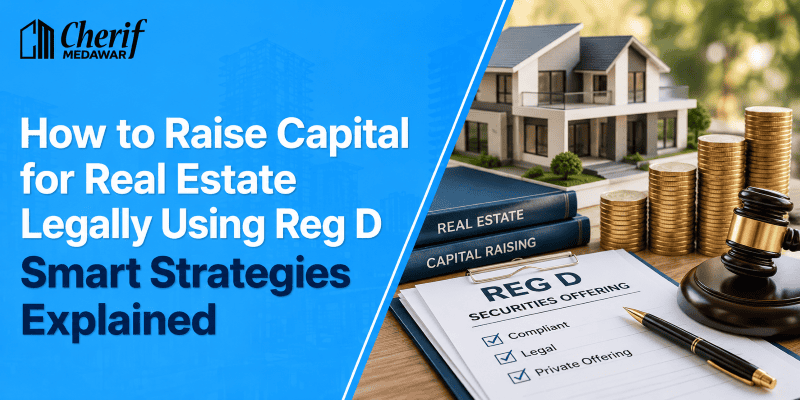
Introduction Raising capital for real estate doesn’t have to be slow, stressful, or limited to friends and family. In fact, with the right legal structure, branding, and communication, you can raise unlimited capital in as little as 90 days—without begging for money or giving up control. As a real estate investor, syndicator, or fund manager, the ability to consistently raise capital is your #1 asset. In this guide, I’ll show you how to: Build trust and authority in the market Legally raise capital using Reg D 506(c) Leverage your brand, content, and systems Create a pipeline of accredited investors Scale from single deals to full real estate funds Let’s unlock your capital-raising potential. Step 1: Structure Your Capital Raise Legally with Reg D 506(c) The fastest and safest way to raise unlimited capital is by using the SEC’s Regulation D 506(c) exemption. What does 506(c) allow you to do? Publicly advertise your deals or fund Raise unlimited capital from accredited investors Maintain control over deal structure and management Note: You must verify investor accreditation and comply with filing rules (Form D, PPM, etc). Key Setup Steps: Form a legal entity (LLC or LP) Work with an experienced securities attorney Prepare your PPM, Subscription Agreement, and Investor Docs Step 2: Build an Investor Pipeline with Authority-Based Marketing Investors give money to people they know, like, and trust. To build this trust fast, use: Content Marketing: Host a free webinar or masterclass Launch a YouTube series or podcast Share behind-the-scenes of your deals Email Funnels: Create a lead magnet (e.g., “How I Built a $100M Portfolio”) Send weekly educational emails to nurture leads Use automated follow-ups for soft commitments Social Proof: Showcase testimonials, investor case studies, and media features Add credibility badges and third-party press to your site Step 3: Leverage a Real Estate Investment Group or Platform Join or build your own real estate investment group—where investors gather for curated opportunities and education. Benefits: Access to capital and deal flow Networking with accredited investors Authority by association (if you host it) Pro Tip: Host monthly roundtable Zoom calls with your investors and invite guest experts—it builds loyalty and positions you as the thought leader. Step 4: Use a Compelling Pitch Deck & Offer Structure Your offer needs to be clear, compelling, and credible. A good pitch deck includes: Your background and track record Why now? (market opportunity) Deal or fund structure overview Investor benefits (returns, preferred equity, etc.) Exit strategy and timeline Use visual storytelling, real examples, and simple financial models. Step 5: Create Urgency and Scarcity Even wealthy investors delay decisions without urgency. Here’s how to move them: Set minimum and maximum contributions Offer early investor bonuses (higher preferred return, lower fees) Use deadlines for each raise phase (e.g., “Soft close in 30 days”) You’re not just raising money—you’re creating demand for access. Automate Your Capital Raising Systems Use technology to scale: CRM (like ActiveCampaign or HubSpot) Investor portals (like SyndicationPro, Juniper Square) Calendar apps to automate investor meetings Retargeting ads to keep your offer top-of-mind Automation = More follow-ups, fewer no-shows, higher conversion. FAQs: Raising Unlimited Capital for Real Estate Deals Q1: Is it really legal to raise unlimited capital? Yes—under Reg D 506(c), you can raise unlimited funds from verified accredited investors as long as you follow SEC rules. Q2: Do I need a license to raise capital? No license is required if you’re raising money for your own deals or fund. However, you cannot broker money for others unless you’re registered. Q3: How do I verify if someone is an accredited investor? Use third-party services like VerifyInvestor.com, or get documentation from their CPA, attorney, or broker. Q4: What if I don’t have a track record? Leverage a partner or mentor’s credibility through a joint venture program, or co-GP on your first few deals while you build your own track record. Q5: How much can I raise in 90 days? With the right setup, content, and pipeline, raising $1M to $10M+ in 90 days is very achievable—especially if you tap into the right real estate investor networks. Final Thoughts Raising unlimited capital isn’t just about asking for money—it’s about building trust, delivering value, and showing leadership. With a strategic approach and legal structure in place, you can build real investor relationships that fund not just one deal—but your entire portfolio.If you’re serious about growth, your first 90 days can change your business forever. Want personalized guidance to set up your legal structure, pitch, and investor funnel?Apply for the Mentorship Program »

Joint Ventures vs. Syndication vs. Partnerships: Best Structure for Real Estate Deals

Joint Ventures vs. Syndication Vs. Partnerships

Introduction When it comes to scaling your real estate investing business, choosing the right legal and financial structure is key to: Raising capital legally Minimizing risk Maximizing control and profits But with so many options, joint ventures, real estate syndications, and investment partnerships, how do you decide what’s best? In this post, you’ll discover: The core differences between JVs, syndications, and partnerships Which structure is best for your strategy and investor base Legal considerations to avoid SEC violations How to join or start a joint venture program or real estate investment group. Let’s break it down. What Is a Joint Venture (JV) in Real Estate? A joint venture is a short-term business agreement between two or more parties who actively participate in a deal. Everyone involved: Has defined roles and responsibilities Shares in the profits and risks Is considered actively involved (not a passive investor) Pros: Simple structure No SEC registration needed Shared risk and decision-making Cons: Limited scalability Must find active partners (not just money) Possible disputes without clear agreements You’re doing one-off deals with another investor, developer, or operator, and all parties are involved in the business plan. What Is a Real Estate Syndication? A real estate syndication is when you (the sponsor) raise capital from passive investors to fund a specific deal or portfolio. The sponsor (you) manages everything: Sourcing the deal Underwriting and closing Asset management The investors provide capital but stay passive.  Legally, syndications fall under SEC securities laws (typically via Reg D 506(b) or 506(c)). Pros: Scalable and repeatable Full control for the sponsor Attracts capital from passive investors Cons: Requires SEC compliance Higher setup costs You carry fiduciary responsibility Use it when: You want to scale your portfolio, raise large sums of capital, and build a real estate investment group with repeat investors. What Is a Partnership in Real Estate? A real estate partnership is a flexible legal arrangement where two or more individuals/entities combine resources, capital, or expertise to pursue deals. Partnerships can be: Equal or unequal in ownership Active or passive Short-term or long-term It’s a broad umbrella term that includes JVs and syndications, but can also include family deals, spouse deals, and informal setups.  Pros: Flexible terms and roles Often low-cost to set up Easier for smaller deals Cons: Can lack structure and clarity Legal exposure without proper agreements Harder to scale Use it when: You’re starting or doing small private deals with trusted individuals. Quick Comparison Chart Feature Joint Venture Real Estate Syndication Partnership Investor Type Active participants Passive investors Active or passive Legal Complexity Low High (SEC regulations apply) Medium Scalability Low–Medium High Low–Medium SEC Compliance Needed? No Yes Maybe Typical Use Case One-off deal Capital raising from a group Small or informal group deals Control for Operator Shared Full Varies Choosing the Right Structure: Key Questions to Ask Do you want to raise money from passive investors? ➤ Choose a syndication with a Reg D exemption. Are you working with 1–2 active partners? ➤ A joint venture is probably best. Are you starting small with people you trust? ➤ A simple real estate partnership could work. Do you want to scale to large portfolios or funds? ➤ Start with syndication and transition into a Reg D 506(c) fund. FAQs: Structuring Real Estate Deals Q1: What’s the easiest way to start raising capital legally? Start with a joint venture if you’re working with a few active partners. As you scale, move into 506(b) or 506(c) syndications for raising passive capital. Q2: Is a real estate syndication safe for beginners? Yes—if you partner with an experienced sponsor or go through a joint venture program first. Always consult legal experts and understand your fiduciary duties. Q3: Can I advertise my deal if I’m doing a syndication? Only if you use Reg D 506(c) and raise money from verified accredited investors. 506(b) Syndications cannot be publicly advertised. Q4: How do I join a real estate investment group? You can start by: Attending CRE mastermind events Listening to deal-focused podcasts Joining mentorship programs like the one at CherifMedawar.com

5 Creative Financing Strategies to Fund Commercial and High-End Residential Deals

5 Creative Financing Strategies

Introduction Funding real estate deals, especially commercial and high-end residential properties, doesn’t have to mean draining your own capital or relying on rigid bank loans. As a real estate investor, syndicator, or fund manager, you need creative, flexible financing strategies to: Close more deals Increase leverage Maximize ROI And scale faster In this blog, I’ll share 5 powerful and proven creative financing techniques I’ve used for years to structure multi-million-dollar real estate deals. Why Creative Financing Is a Game-Changer Traditional financing (bank loans, hard money, etc.) often: Has strict underwriting criteria Requires significant down payments Slows down your ability to scale Creative financing bypasses traditional gatekeepers and gives you full control over how you fund and structure your deals. With the right strategy, you can buy properties with little to no of your own money, reduce risk, and create win-win scenarios for all parties involved. Let’s dive into the top 5 strategies. 1. Seller Financing (Owner Carry) What it is: The seller acts as the lender, allowing you to pay them directly over time—often with better terms than a bank. Why it works: Great for sellers who own the property free and clear You avoid banks and appraisals Can negotiate interest-only or low monthly payments Use case: Luxury residential sellers often accept seller financing to defer taxes or generate passive income. 2. Subject-To (Sub2) Financing What it is: You acquire a property “subject to” the existing mortgage, meaning you take over the payments without formally assuming the loan. Why it works: No need for new loan approval Keeps original interest rate (often lower than today’s rates) Preserves seller’s credit (if paid on time) Requires trust and transparency with the seller, but when done right, it’s extremely powerful. 3. Equity Partnerships & Joint Ventures What it is: Bring in equity partners who contribute capital, while you handle the deal sourcing, management, and execution. Why it works: No interest payments Shared upside Flexible structure (profit split, preferred returns, etc.) This is how many commercial investors scale portfolios without taking on debt. 4. Syndication with Preferred Returns What it is: A group of investors pools capital, and you (as the sponsor) manage the deal, offering them a preferred return before sharing profits. Why it works: You control the deal Investors love transparency and structure Works well for larger commercial deals ($1M+) Pro tip: Use a Reg D 506(c) fund to raise capital legally and publicly, even from people you don’t know. 5. Option Contracts & Lease Options What it is: You secure a property with a purchase option or lease option, giving you control without owning it outright until you’re ready. Why it works: Lock in today’s price Control high-end property with low upfront cost Sublease, reposition, or flip the contract Often used by luxury developers and high-end flippers. FAQs: Creative Financing for Real Estate Investors Q1: What’s the safest creative financing method for beginners? Seller financing is often safest especially if the seller is motivated and open to flexible terms. Q2: Can I use creative financing for luxury residential properties? Absolutely. Many high-end homeowners prefer seller financing or lease options for tax and estate planning reasons. Q3: How do I legally raise capital for real estate deals? Use a Regulation D 506(c) fund. It lets you publicly advertise and raise funds from accredited investors. Learn more here. Q4: What if I don’t have a track record yet? Start with joint ventures or co-GP roles in larger deals to build experience while leveraging someone else’s credibility. Q5: Do I need a license to raise money or use creative financing? Not necessarily—but you must structure your deals legally. Always consult an SEC attorney and educate yourself on fund regulations. Final Thoughts Creative financing isn’t just for investors with no money—it’s a power move for seasoned professionals who want to build long-term wealth, Access off-market deals, attract the right partners, and maximize deal flow with minimal personal risk. These strategies have helped me structure hundreds of millions of dollars in commercial and high-end real estate deals. You can do the same if you learn the rules and think creatively. Get My Free Training on Raising Capital Want to learn how I raise capital legally using creative structures and Reg D 506(c) funds? 🎓 Watch My Free Masterclass Now »

How to Build a Real Estate Fund That Operates Like a Bank (Reg D 506(c))

How to Build a Real Estate Fund

Introduction Imagine having the ability to raise unlimited capital from accredited investors, deploy it strategically in real estate, and generate consistent, compounding returns—just like a bank. That’s exactly what a well-structured Real Estate Fund under Regulation D 506(c) allows you to do. In this guide, you’ll learn: What a real estate fund is and why 506(c) is a game-changer Step-by-step setup for building your fund How to operate your fund like a bank, issuing debt, collecting interest, and creating leverage Compliance tips and investor best practices FAQs and high-CTR meta info to boost discoverability. Let’s dive in. What Is a Real Estate Fund? A Real Estate Fund is a pooled investment vehicle where investors contribute capital to be used for acquiring, managing, or developing real estate assets. Funds may target: Commercial real estate Multifamily portfolios Hospitality assets Land development Debt instruments (e.g., bridge loans) You, as the Fund Manager (or General Partner), control the capital and make decisions on behalf of your Limited Partners (investors). Why Choose Reg D 506(c) to Structure Your Fund? Regulation D 506(c) (under the SEC) offers a unique advantage:  You can publicly advertise your fund and still raise unlimited capital—from accredited investors only. This differs from Reg D 506(b), which prohibits general solicitation and limits you to 35 non-accredited investors. Key Benefits of 506(c): Unlimited fundraising potential Marketing freedom via social media, webinars, and podcasts Control over deal terms and fund direction Faster capital deployment with pre-verified investors Ready to Launch Your Own Real Estate Fund? Get my free training on raising capital legally under Reg D 506(c) and learn the exact framework I’ve used to raise millions.  Watch the Free Masterclass Now » Step-by-Step: How to Build Your Real Estate Fund Like a Bank Step 1: Define Your Fund Strategy Start with clarity: What property types will you invest in? What markets will you target? Will you focus on equity, debt, or hybrid deals?  Example: “A $25M fund investing in value-add multifamily assets across Texas and Florida, targeting 15% IRR.” Step 2: Form Your Legal Entity Typically: LLC or LP for the fund LLC or Corp for the GP (General Partner or manager) Work with an SEC attorney to draft: Private Placement Memorandum (PPM) Subscription Agreement Operating Agreement Step 3: File with the SEC You’ll need to: File Form D within 15 days of your first sale Maintain investor accreditation documentation (required for 506(c)) Keep clear records — Reg D 506(c) requires proof of accreditation, not just a self-certification checkbox. Step 4: Raise Capital Strategically Because 506(c) allows public promotion, use: Landing pages with opt-in forms Webinars showcasing your fund model Podcasts and interviews (e.g., your existing real estate mastermind) Email marketing and retargeting ads Always include disclaimers and consult with your compliance team. Step 5: Deploy Capital Like a Bank This is where you make your fund operate like a financial institution: Issue debt (e.g., short-term bridge loans) Collect interest payments Recycle capital to multiple deals Charge origination and management fees Use leverage to increase fund size and ROI A well-run fund can act like a bank: safe, systematic, and scalable. Step 6: Return Capital + Profits to Investors Common return structures include: Preferred return (e.g., 8%) Equity split after hurdle (e.g., 70/30) Quarterly distributions Capital event payouts (e.g., refinance or sale) Transparent investor communication and timely reporting are crucial to long-term success. Real Estate Fund vs. Syndication: What’s the Difference? Feature Real Estate Fund (506c) Syndication Structure Blind pool / multiple deals One deal at a time Fundraising Ongoing, flexible Deal-specific Marketing Publicly allowed (if 506c) Private (unless 506c) Investor Base Accredited only (for 506c) Can include limited non-accredited Complexity Higher Lower Common Mistakes to Avoid Not verifying investor accreditation properly Offering unrealistic or vague returns Poor communication during capital deployment Inadequate legal/compliance preparation Ignoring investor reporting and updates FAQs: Real Estate Funds & Reg D 506(c) Q1: Can I use social media to promote my 506(c) fund? Yes, you can publicly advertise—but you must verify each investor’s accredited status before accepting funds. Q2: How do I verify an investor is accredited? Use: 3rd-party verification services (e.g., VerifyInvestor.com) CPA or attorney letters Income or net worth documentation Q3: Can I accept international investors in a 506(c) fund? Yes, but ensure you comply with both U.S. and foreign securities laws. Q4: What’s the minimum capital required to start a fund? You can start lean, but budget at least $15K–$30K for legal setup, filings, and marketing. Q5: Is a fund better than a syndication? If you want scalability, flexibility, and control, yes, a fund is often better. Prefer to Learn on the Go? Subscribe to my podcast where I break down real JV deals, fund strategies, and creative financing methods. 🎙️ Listen to the Podcast Now » Final Thoughts A Reg D 506(c) Real Estate Fund isn’t just a funding vehicle—it’s a powerful wealth creation tool. With the right setup, strategy, and systems, you can raise capital at scale, operate like a financial institution, and deliver consistent returns to investors. The world doesn’t need another deal-hustler—it needs smart fund managers who think like banks and act with integrity. Want Help Structuring Your Fund from the Ground Up? Book a 1-on-1 strategy call and get expert guidance on legal setup, investor strategy, and deal flow.  Schedule Your Call Today »

Why Your Attorney Isn’t Talking Real Estate Fund Structures—And Why You Should Be Asking

Real Estate Fund Structures

Introduction When you sit down with your real estate attorney, the conversation usually focuses on the details of your current deal. But there’s one question most attorneys don’t raise—whether your business is ready for a fund structure instead of another syndication. While attorneys are experts in compliance and documentation, they may not push you to consider the bigger strategic leap a fund offers. Let’s explore why this conversation gets overlooked—and why you should make it a priority if you want to grow your real estate business. Attorneys Are Transactional—You Need to Think Strategically Most attorneys are wired to help you close your immediate transaction: Draft PPMs and subscription docs Ensure you select the right SEC exemption File the right documents with the right agencies But unless you bring up fund structures, they’re unlikely to suggest you look beyond your current syndication model. Why Fund Structures Often Go Unmentioned Attorneys follow your lead: If you ask for a syndication, they assume that’s what you want. They’re focused on compliance, not growth: Their job is to keep you out of trouble, not help you scale. Funds are more complex: Not every sponsor is ready for the higher bar that fund management brings. Why You Should Be Asking About Fund Structures Scale Your Business:   A fund gives you a pool of capital to deploy across multiple deals. This means you can move quickly when opportunities arise. Attract Sophisticated Investors: Funds attract bigger checks from investors who want diversification and trust you with broader strategy. Diversification:   Funds spread risk across several properties, making your offering more attractive to risk-conscious investors. Repeatable Process:   With a fund, you can create a business platform, not just a series of one-off deals. Read more about fund vs. syndication here. How to Start the Conversation Tell your attorney you want to understand fund structures—even if you’re just exploring. Ask them to outline legal, compliance, and operational differences between syndications and funds. Find out what additional support or advisors you might need. Want practical examples and a step-by-step action plan?   Register for my free on-demand training to learn how to launch your own real estate investment fund in just 21 days. Conclusion Your attorney’s job is to serve your legal needs, but your job is to think ahead. By proactively asking about fund structures, you can unlock new opportunities and build a more scalable, resilient business.

Understanding SEC Regulations: Read This Before You Raise Real Estate Capital

Real Estate Capital Raising

Introduction Launching a real estate syndication or fund means stepping into the world of securities laws—a world that can seem intimidating to even experienced investors. While your syndication attorney will guide you through the legal process, it’s essential to understand the basics of SEC regulations yourself. Being informed not only keeps you compliant but also builds trust with your investors and helps you avoid costly mistakes. Let’s break down what you truly need to know about SEC regulations and how to stay on the right side of the law as you raise capital for your real estate deals. Why SEC Regulations Matter Whenever you raise money from investors—whether for a single deal or a fund—you’re offering a security, and that means you fall under the jurisdiction of the Securities and Exchange Commission (SEC). Failure to comply with SEC rules can result in fines, lawsuits, or even being barred from future offerings. Key Concepts: Syndications and Securities A security exists when you pool investor money, manage the project, and promise returns. This is the case for almost all real estate syndications and funds. Your syndication attorney will help you select the proper SEC exemption so you can avoid the full burden of registering your offering (which is expensive and time-consuming). The Most Common SEC Exemptions for Real Estate #1. Regulation D, Rule 506(b) Allows up to 35 non-accredited investors and unlimited accredited investors. No general solicitation (you can’t publicly advertise the deal). You must have a “substantive pre-existing relationship” with your investors. #2. Regulation D, Rule 506(c) Only accredited investors allowed. General solicitation is permitted (you can advertise and market publicly). You must verify investors’ accredited status (not just take their word for it). #3. Regulation A+ and Others These are less common for real estate syndications due to higher costs and complexity, but they can allow you to raise money from non-accredited investors with some public marketing. What Your Attorney Handles (and What You Should Know) Your attorney will: Draft your Private Placement Memorandum (PPM), subscription agreements, and entity documents. Advise you on which exemption to use. Handle state “blue sky” filings and SEC Form D. You should: Understand which exemption you’re using and why. Know who you can market to, and how. Be able to explain the basics to investors—this builds credibility and trust. Learn more about legal structures and compliance in this guide. Common Compliance Mistakes (and How to Avoid Them) General Solicitation Mistakes: Advertising a 506(b) offering is a major violation. Improper Investor Verification: For 506(c), you must verify accredited status with documentation, not just an investor questionnaire. Inadequate Disclosures: Your PPM must fully disclose risks—cutting corners here is risky and unprofessional. Poor Record-Keeping: Keep thorough records of all communications and investor documents. Why Staying Compliant Builds Your Brand Investors want to know their money is safe—not just in a good deal, but in a deal that follows the rules. Being transparent and proactive with SEC compliance enhances your reputation and encourages repeat investment. See how experienced fund managers approach compliance in my free on-demand training. Conclusion SEC regulations might seem daunting, but understanding the basics puts you in control and helps you build a lasting, trustworthy business. Partner with a great syndication attorney, stay informed, and always put investor protection first. Ready to master the legal and compliance side of real estate funds and syndications? Register for my free on-demand training and learn the step-by-step process to launch your fund the right way.

Syndication or Fund? The Strategic Choice Your Lawyer Won’t Make for You

Syndication or Fund?

Introduction If you’re ready to scale your real estate investing, you’ll face a pivotal fork in the road: Should you continue syndicating one deal at a time, or launch a real estate fund? Your attorney will help you handle the paperwork and ensure compliance, but the strategic decision—what’s right for your business, investors, and long-term goals—is ultimately yours. Let’s explore the strategic factors you must consider, so you can confidently choose the right path for your situation. Why Your Lawyer Can’t (and Shouldn’t) Decide Attorneys are experts in law, not in your unique vision or entrepreneurial ambitions. They’ll explain legal structures, draft documents, and outline compliance requirements. But they won’t—and shouldn’t—tell you how to build your business. That’s because the best structure for you depends on factors like: Your desired pace of growth The types of investors you want to attract Your risk tolerance and appetite for complexity Your ambitions for scalability and legacy Learn more about legal structures for real estate funds here. Key Strategic Considerations #1. Deal Flow and Pipeline Syndication is ideal if you source deals sporadically or want to test the waters before scaling. A fund makes sense if you have a strong pipeline and want capital ready to deploy quickly. #2. Investor Relationships Syndication: Investors come and go with each deal, requiring repeated fundraising efforts. Fund: Investors commit for the life of the fund, fostering deeper, longer-term relationships. #3. Diversification and Risk Syndication: Each investor’s risk is tied to one project. If a deal underperforms, there’s no cushion. Fund: Capital is spread across multiple properties, reducing the impact of any single asset. #4. Control and Flexibility Syndication: Investors may want more say in each deal. You’re tied to that specific property until exit. Fund: You have more discretion to pursue opportunities that fit the fund’s thesis—without asking for approval each time. #5. Speed and Scalability Syndication: Each new deal requires new paperwork, new capital raising, and new investor onboarding. Fund: Capital is pooled upfront, allowing you to move fast when great opportunities arise. What Your Lawyer Will Do Advise on legal risks and compliance. Draft the appropriate documents for either structure. Ensure your offering meets SEC and state regulations. But only you can weigh the business trade-offs and choose your trajectory. Making the Decision Ask yourself: Am I ready to manage multiple assets at once? Do I have a network of investors who trust my judgment across several deals? Is my pipeline strong enough to deploy raised capital efficiently? Do I want to build a scalable, long-term investment platform? If you answer yes, a fund may be your next step. If you prefer a more focused, deal-by-deal approach while building experience, syndication can still serve you well. Need more clarity?   Register for my free on-demand training to see real-world examples, success stories, and a step-by-step action plan for launching your fund. Conclusion Your attorney is a critical advisor—but the strategic direction of your business is up to you. Understanding the business implications of syndications and funds will empower you to move forward with confidence and control.

Tax Implications: Syndications vs. Real Estate Funds

Syndications vs. Real Estate Funds Tax

Introduction One of the most overlooked—but critically important—considerations when raising real estate capital is tax treatment. Both syndications and funds offer unique tax benefits and challenges for sponsors and investors alike. Understanding these differences not only helps you maximize returns, but also enables you to answer investor questions confidently and structure your deals for long-term success. Let’s break down the key tax implications for syndications and real estate funds, and what you should keep in mind as you grow your business. How Syndications Are Taxed A real estate syndication is typically structured as a pass-through entity (such as an LLC or LP). Here’s what that means for you and your investors: Pass-Through Taxation: Profits, losses, depreciation, and other tax items “flow through” to individual investors, who report them on their returns. K-1 Statements: Each investor receives a Schedule K-1 annually, summarizing their share of income, losses, and deductions. Depreciation Benefits: Investors can take advantage of property depreciation, often resulting in tax-deferred cash flow. Capital Gains: When a property is sold, investors pay capital gains tax on their share of the profits. Pros:   Direct allocation of income and losses. Potential for significant depreciation deductions. Simple for single-asset deals. Cons:   Investors must manage K-1s from each deal. No diversification of tax impact—if a property underperforms, losses may be limited to that investment. How Real Estate Funds Are Taxed A real estate fund is also usually set up as a pass-through entity (LLC or LP). However, the structure creates some key differences: Pooled Tax Reporting: Investors receive one K-1 for the entire fund, reflecting their share across all properties in the portfolio. Depreciation and Losses: Depreciation from multiple assets can be pooled, smoothing out the impact of underperforming properties and maximizing deductions. Reinvestment Flexibility: Many funds can reinvest sale proceeds into new properties (rather than distributing them immediately), potentially deferring capital gains. Potential for 1031 Exchanges: Some funds are structured to allow for partial or full 1031 exchanges, though this requires careful legal planning. Pros:   Simpler tax paperwork for investors (one K-1). Diversified depreciation and loss benefits. Greater flexibility to manage gains and reinvest capital. Cons:   More complex accounting and compliance requirements. Investors may have less visibility into the tax performance of individual assets. Key Tax Considerations for Sponsors Management Fees: Fees paid to sponsors are generally taxed as ordinary income. Carried Interest: Profit participation (“carried interest”) may be treated as long-term capital gains if the fund holds assets for more than three years, which is usually more favorable than ordinary income tax rates. State Taxes: Funds and syndications investing in multiple states may create additional filing requirements for both sponsors and investors. What Should You Tell Investors? Tax questions are often top of mind for experienced investors. Be ready to explain: The type of entity (LLC, LP) and why you chose it. How depreciation, gains, and losses will be allocated. When and how they will receive K-1s. The potential for tax deferral or reinvestment strategies. Pro Tip: Always recommend investors consult their own tax advisors, as individual situations can vary. Conclusion The right tax structure can make a significant difference in investor satisfaction and after-tax returns. Whether you’re syndicating or launching a fund, being proactive and transparent about tax implications will set you apart as a trustworthy sponsor. Want to learn more about structuring your fund for maximum tax efficiency?   Register for my free on-demand training to get insider strategies on fund setup, tax benefits, and capital raising—all in just 90 minutes.

Pros and Cons: Raising Capital Through Syndication vs. Starting a Fund

real estate syndication vs fund

Introduction If you’re serious about scaling your real estate business, you’ve probably asked yourself: “Should I keep syndicating deals, or launch my own fund?” Both approaches give you access to investor capital, but the structure, flexibility, and long-term potential are very different. Understanding the trade-offs will help you choose the path that fits your goals, risk tolerance, and growth plans. Let’s break down the pros and cons of raising capital through syndication versus starting a real estate fund. What Is a Real Estate Syndication? A syndication pools money from multiple investors for a single property or project. Each deal is its own legal entity, with investors owning shares specific to that asset. Typical structure:   The sponsor (you) identifies a property, negotiates the acquisition, and creates an entity (LLC or LP). Investors commit capital for just that one property. Once the project is completed or sold, the syndication winds down. What Is a Real Estate Fund? A fund pools investor capital into a single entity, then deploys that capital across multiple deals according to an established investment strategy. Investors buy into the fund, not specific properties. Typical structure:   One fund entity, multiple properties. Investors trust you to acquire and manage assets that fit the fund’s thesis. Funds can be closed-ended (fixed term) or open-ended (evergreen). Pros & Cons of Syndication #Pros: Easier to Launch: Fewer upfront legal requirements; ideal for new sponsors. Deal-Specific Marketing: Investors know exactly what they’re buying into. Simpler Pitch: Fundraising is focused on one asset, making due diligence straightforward. #Cons: No Scalability: Each new deal requires a new entity, new paperwork, and fresh investor commitments. Timing Pressure: If you can’t raise the full capital, you risk losing the deal. No Capital Flexibility: There’s no “war chest”—you’re always starting from scratch. Pros & Cons of a Real Estate Fund #Pros: Scalability: Deploy capital across multiple deals without going back for new commitments each time. Investor Diversification: Risk is spread over several properties, appealing to many investors. Speed to Close: With committed capital, you can act quickly when new opportunities arise. Builds Long-Term Relationships: Investors stay with you for the life of the fund, not just a single deal. #Cons: More Complex Setup: Requires a strong legal team, a detailed PPM, and compliance with SEC regulations. Track Record Matters More: Investors need to trust your judgment, since they’re investing in your process, not a specific deal. Ongoing Reporting: Investors expect regular, transparent updates on the entire portfolio. Which Model Is Right for You? – Choose syndication if: You’re newer to raising capital, want to build your track record, or prefer deal-by-deal relationships. – Choose a fund if:   You’re ready to scale, want to diversify risk, and attract larger, more sophisticated investors. Many successful real estate entrepreneurs start with syndications and transition to funds as their experience and investor base grow. Learn exactly how to leap from syndicator to fund manager in my free training. Conclusion Both syndications and funds are powerful ways to raise capital, but each has unique advantages and drawbacks. By weighing the pros and cons, you can choose the approach that aligns with your business goals—and your investors’ needs. Want a detailed action plan for launching your own fund, including legal, marketing, and capital-raising strategies? Register for my on-demand training and get the blueprint to scale your real estate business in 21 days.

Building Your Team: Key Roles Needed to Launch and Operate a Real Estate Fund

fund management roles

Introduction No successful real estate fund is a solo act. Even the most experienced sponsors rely on a strong team to manage the complex legal, financial, operational, and investor relations aspects of fund management. Assembling the right group of professionals is not just about filling seats—it’s about creating a foundation for trust, efficiency, and long-term growth. Let’s explore the essential roles you need to fill (and why each matters) as you launch and grow your real estate fund. Fund Manager / Sponsor At the heart of every real estate fund is the sponsor or fund manager—you. Responsibilities: Defining the fund’s investment strategy and vision Sourcing and underwriting deals Managing the acquisition and disposition process Overseeing team performance and investor relations If you’re moving from syndications to funds, your leadership is even more critical, as investors look to you for track record, integrity, and clarity of vision. Learn how to transition from syndicator to fund manager in this free training. Securities Attorney Launching a fund means navigating complex securities regulations. Responsibilities: Structuring your fund entity (LLC, LP, etc.) Drafting the Private Placement Memorandum (PPM), operating agreement, and subscription documents Ensuring SEC compliance and handling state filings A knowledgeable attorney is non-negotiable—mistakes here can jeopardize your fund before it starts. See our guide to legal structures for more on this topic. Certified Public Accountant (CPA) or Fund Accountant Your fund’s finances must be impeccable. Responsibilities: Designing the fund’s accounting systems Overseeing capital calls, distributions, and investor allocations Preparing tax documents and annual audits A CPA with real estate fund experience will help you avoid costly errors and keep investors confident in your reporting. Investor Relations Manager As your fund grows, so does the need for ongoing communication. Responsibilities: Onboarding new investors and answering their questions Providing regular updates and performance reports Managing distributions and responding to concerns Excellent investor relations can set your fund apart and encourage investors to re-invest in future offerings. Acquisition & Asset Management Team Great deals are the lifeblood of your fund. Responsibilities: Sourcing, underwriting, and performing due diligence on new acquisitions Overseeing property management, value-add strategies, and dispositions Monitoring performance against fund projections Early on, you may fill these roles yourself, but as you scale, specialists will allow you to move faster and smarter. Fund Administrator (Optional, but Highly Recommended) A fund administrator handles much of the back-office work so you can focus on strategy. Responsibilities:   Managing capital accounts, investor statements, and compliance records Facilitating smooth capital calls and distributions Handling reporting and audits Outsourcing this role can boost efficiency and minimize errors, especially as your investor base grows. Advisors and Board Members Experienced advisors—attorneys, accountants, real estate pros—can provide invaluable oversight and credibility. Tap into their expertise for deal vetting, strategy pivots, and crisis management. Their presence reassures investors that your fund is well-governed. How to Assemble Your Team Start with your core strengths: Fill gaps with trusted partners or outside advisors. Prioritize experience: Seek professionals with direct real estate fund experience. Communicate your vision: Make sure everyone is aligned with your fund’s goals and values. Conclusion A high-performing real estate fund is built on the shoulders of a high-performing team. By assembling the right legal, financial, operational, and advisory talent, you’ll set your fund up for smooth operations, regulatory compliance, and investor trust. Ready to see how seasoned sponsors build their teams and launch successful funds?   Register for my on-demand training to get the proven blueprint for assembling your fund team and launching in just 21 days.

Skip to content