
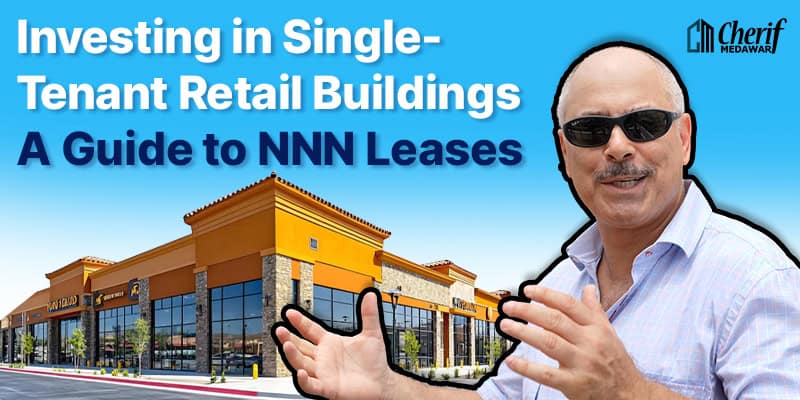
Introduction
If you’re looking for potentially consistent passive income, low maintenance, and strong tenants like Starbucks, Walgreens, or Dollar General, Single-Tenant Net-Leased (STNL) retail buildings may be your ideal investment.
Also known as NNN (Triple Net) lease properties, these assets can offer a relatively stable income profile with minimal landlord responsibilities, depending on the tenant and lease terms.
In this guide, you’ll learn:
- What NNN leases are and how they work
- Pros and cons of investing in single-tenant retail buildings
- How to evaluate a net lease deal
- Common mistakes to avoid
- Why institutional investors and family offices love this asset class
Let’s dive in.
What Is a NNN (Triple Net) Lease?
A Triple Net Lease (NNN) is a lease agreement where the tenant is responsible for:
- N – Property Taxes
- N – Insurance
- N – Maintenance
That means as the investor (landlord), you collect net rent without worrying about repairs, tax hikes, or insurance issues.
This lease type is most common in single-tenant retail properties, such as:
- Fast food and QSR chains (e.g., Taco Bell, Wendy’s)
- Drugstores (e.g., CVS, Walgreens)
- Auto parts stores (e.g., AutoZone)
- Convenience and dollar stores
- Banks and medical buildings
Why Invest in Single-Tenant Retail Buildings?
1. Passive Income with Predictability
NNN properties offer contracted rent for 10–25 years, often with annual increases, creating a bond-like income stream.
2. Minimal Landlord Responsibility
The tenant handles property taxes, insurance, and maintenance—making it ideal for out-of-state or busy investors.
3. Creditworthy Tenants
Many NNN tenants are publicly traded companies with strong balance sheets and recession resistance.
4. High Liquidity
Because of their simplicity and tenant strength, STNL assets are easy to finance, sell, or 1031 exchange.
How NNN Leases Work in Practice
Let’s say you buy a Walgreens for $4 million with a 5.5% cap rate.
- Tenant: Walgreens (publicly traded, investment grade)
- Lease Term: 20 years remaining, with 5 x 5-year options
- Rent: $220,000/year
- Escalations: 10% every 5 years
- Expenses: 100% covered by Walgreens
As an investor, you’re receiving $18,333/month net, with no active involvement.
What Makes a Strong NNN Investment?
To protect and grow your capital, consider:
1. Tenant Credit
Look for investment-grade tenants (BBB- or better). Public company tenants have better performance history and lower default risk.
2. Location
Strong demographics, visibility, and traffic counts drive long-term value and residual land value.
3. Lease Term
The longer the lease, the better. Look for 10+ years remaining, ideally with rent escalations.
4. Rent Per Square Foot
Make sure the rent aligns with market rents. Over-market rents can lead to vacancy risk at renewal.
5. Guarantor Strength
Prefer corporate-guaranteed leases over franchisee-backed ones—unless the operator is financially strong.
Pros and Cons of NNN Lease Investments
Pros | Cons |
Passive, stable income | Lower cap rates (4%–6%) |
Minimal management | Limited appreciation potential |
Strong credit tenants | Vacancy risk if the tenant leaves |
Predictable cash flow | Less control over property use |
Great for 1031 exchanges | Market-dependent tenant performance |
Who Should Invest in Single-Tenant NNN Properties?
- High-net-worth individuals seeking passive income
- Retirees looking for stability and estate planning
- 1031 exchange buyers wanting a hands-free replacement
- Private funds aiming for income with low overhead
- Family offices diversifying into stable real estate
Risks and How to Mitigate Them
Vacancy Risk
If your only tenant leaves, you’re at 100% vacancy. Mitigate this by:
- Choosing long-term leases with renewal options
- Picking locations with high residual land value
Rent Creep
If rent escalations are too slow, inflation can outpace returns. Look for leases with 2%–3% annual bumps.
Overpaying
Many investors overpay for “brand names.” Always analyze cap rates, lease terms, and replacement value.
FAQs: Investing in Single-Tenant NNN Properties
Q1: What is the typical return on a NNN lease?
Cap rates range from 4% to 7%, depending on tenant, location, and lease length.
Q2: Can I use a 1031 exchange to buy an NNN property?
Yes—NNN assets are popular 1031 exchange targets due to their simplicity and cash flow.
Q3: Are all NNN leases truly passive?
Not all. Some leases still require landlord involvement for roof or structure—always check the lease language.
Q4: Can I finance an NNN property?
Yes. Many lenders will finance up to 65%–75% LTV, especially with credit tenants and long leases.
Q5: Should I buy corporate or franchisee-backed leases?
Corporate leases are lower risk, but strong franchise operators with personal guarantees can offer higher returns.
Final Thoughts
Investing in single-tenant retail properties with NNN leases is one of the most passive and predictable ways to build long-term exposure to income-producing real estate.
By targeting creditworthy tenants, securing long-term leases, and focusing on prime locations, you can enjoy steady income, tax benefits, and low operational headaches.
Whether you’re transitioning from active investing or seeking hands-free passive income, NNN lease properties offer a powerful solution—when done right.
Watch More – Investing in Retail
Disclaimer:
This article is for educational purposes only and is not investment, financial, or legal advice. Any examples or cap rate ranges are hypothetical and not guarantees of performance. Real estate investments carry risk, including tenant defaults, vacancies, and market fluctuations. Always consult licensed professionals and review offering documents before investing.